

VR for Exploring Art: Revealing Layers of the Past
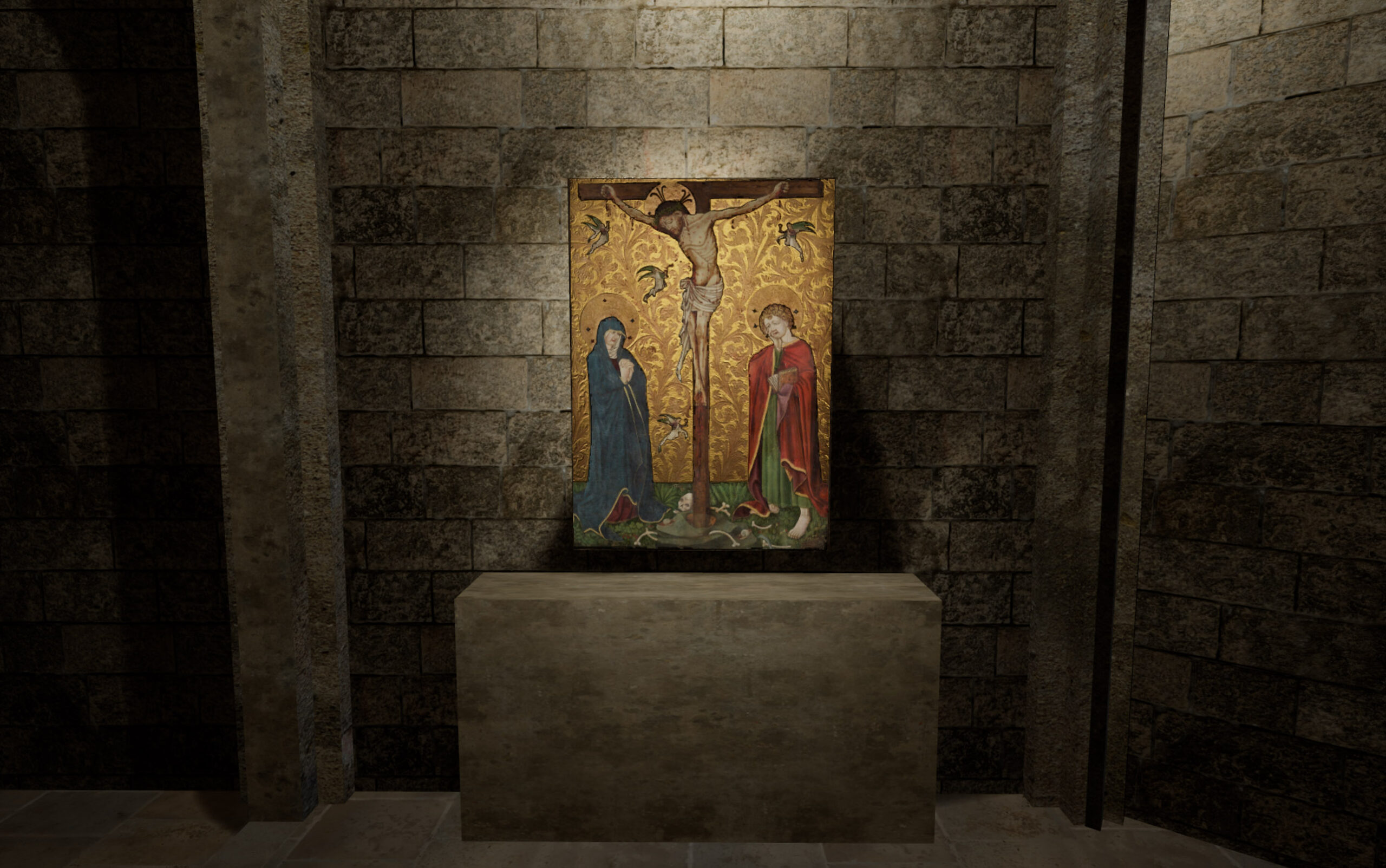
In 2022, the XR Zone at TU Delft’s New Media Center launched VR for Exploring Art, an immersive journey into the complex life of a medieval painting — a work that, over centuries, had been altered, repainted, and reinterpreted, sparking debate among art historians over its “true” state. This virtual reality experience doesn’t just recreate a painting — it reconstructs a dialogue across time.
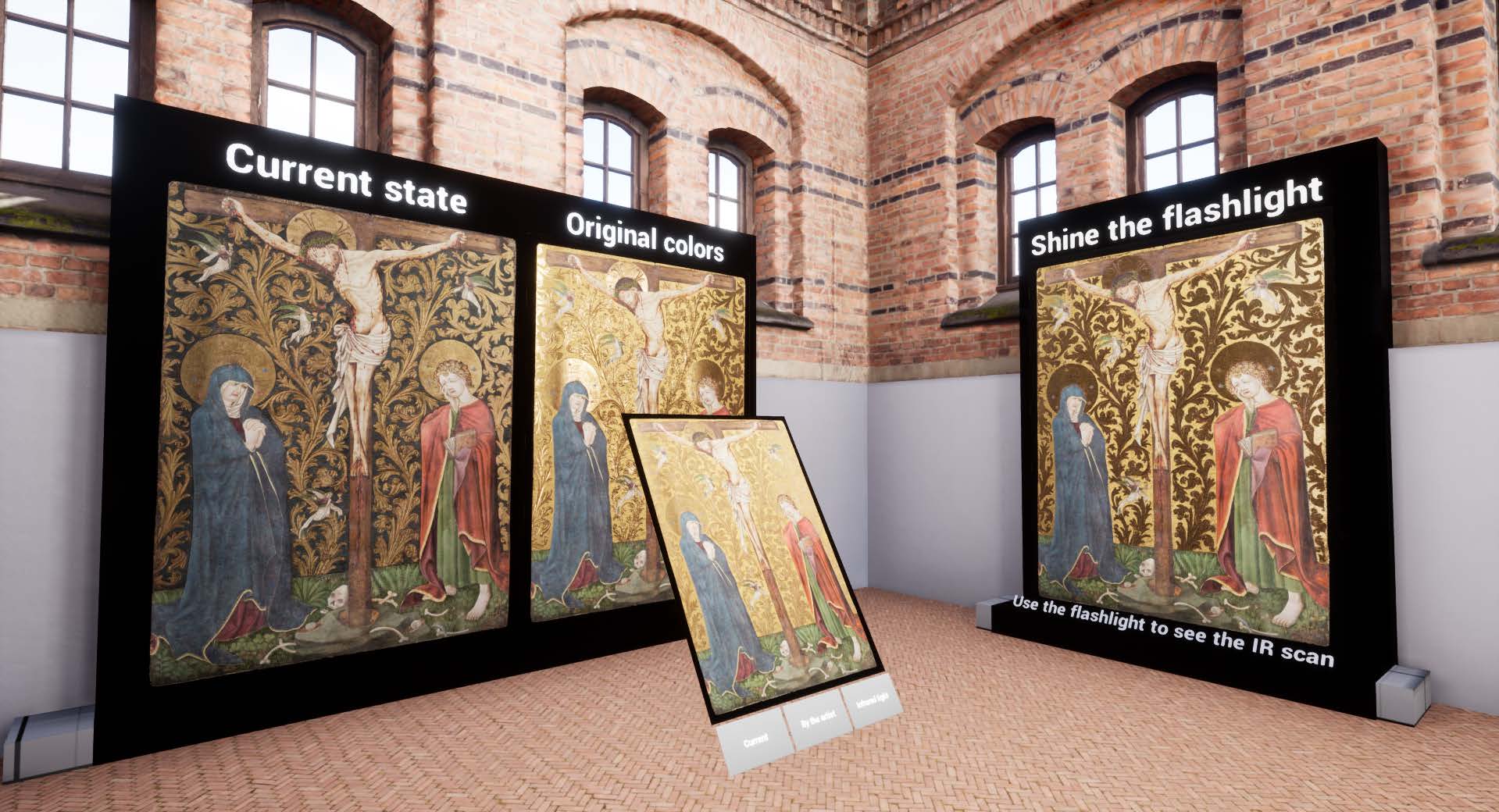
The project began with a single, enigmatic artwork. Originally created in the Middle Ages, it was later repainted, concealing key elements of the original composition. Today, the painting hangs in a museum in its altered state. Yet, beneath layers of oil and varnish, fragments of the original remain, faintly visible under ultraviolet light — traces of a hidden past.
Using advanced scanning technologies, art historians were able to reconstruct several stages of the painting’s evolution. These reconstructions form the basis of the VR experience, which allows participants to view and compare the original medieval version with the later, repainted version. In the immersive environment, users can toggle between different layers of the artwork, revealing areas that were modified, erased, or added over time. The experience is both visual and critical — encouraging participants to form their own interpretations about authenticity, preservation, and artistic intent.
“Every layer tells a story — in VR, we don’t just look at art; we witness centuries of choices, erasures, and revelations unfold before our eyes.”
Together, these projects underscore the importance of behavioral design and social presence in the development of service robots. By using VR as a tool to explore trust, predictability, and personal comfort in mixed human-robot spaces, the research offers insights into how robots might function and how we might feel when they become part of our everyday environments.
The outcomes include academic publications, visual documentation, and ongoing design explorations, contributing to a growing body of research at the intersection of human factors, robotics, and immersive technology.
For more information, visit the Delft Design Labs project page: Designing Robots for Human Acceptance and Social Embedding in Retail
https://www.tudelft.nl/io/over-io/afdelingen/sustainable-design-engineering/kind/projects-labs/designing-robots-for-human-acceptance-and-social-embedding-in-retail
https://repository.tudelft.nl/record/uuid:9b866cff-ecb9-490b-86be-f256e4180189
https://dl.acm.org/doi/10.1145/3678186
Candlelight original
Candlelight reconstructed
Spotlight original
Spotlight original
Developer : Jeroen Boots, Yoshua Pranata Andoko
XR: Arno Freeke