
From Real Spaces to Virtual Worlds: Gaussian Splatting for Research and Education
How emerging 3D and other media technologies are opening new possibilities for digital experiences at TU Delft.
Technology moves quickly. For researchers and educators, keeping up with new tools is not only about understanding how they work, it is about discovering what they could make possible and how they can improve education.
As a hub for new media technologies at TU Delft, the Medialab of the NewMedia Centre explores emerging tools and techniques and looks for meaningful ways to apply them in academic and research contexts. From immersive experiences and 360° media to 3D visualisation and virtual environments, the focus is not simply on adopting the newest technology. It is on understanding when a technology is useful, what it makes possible, and how it can support the story a researcher or educator wants to tell.
One technology that has recently become part of NMC toolset for research is Gaussian Splatting.
What is Gaussian Splatting?
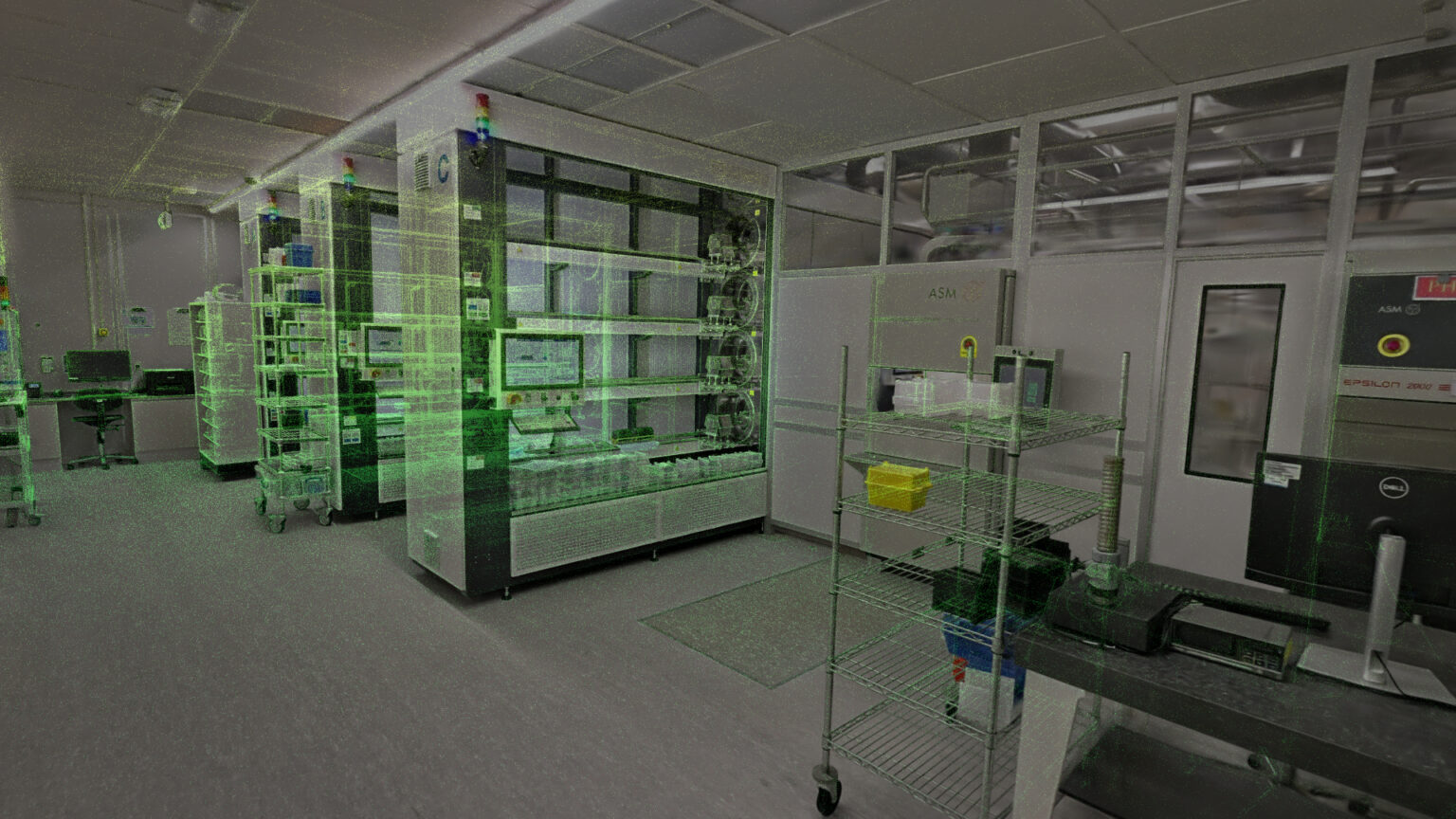
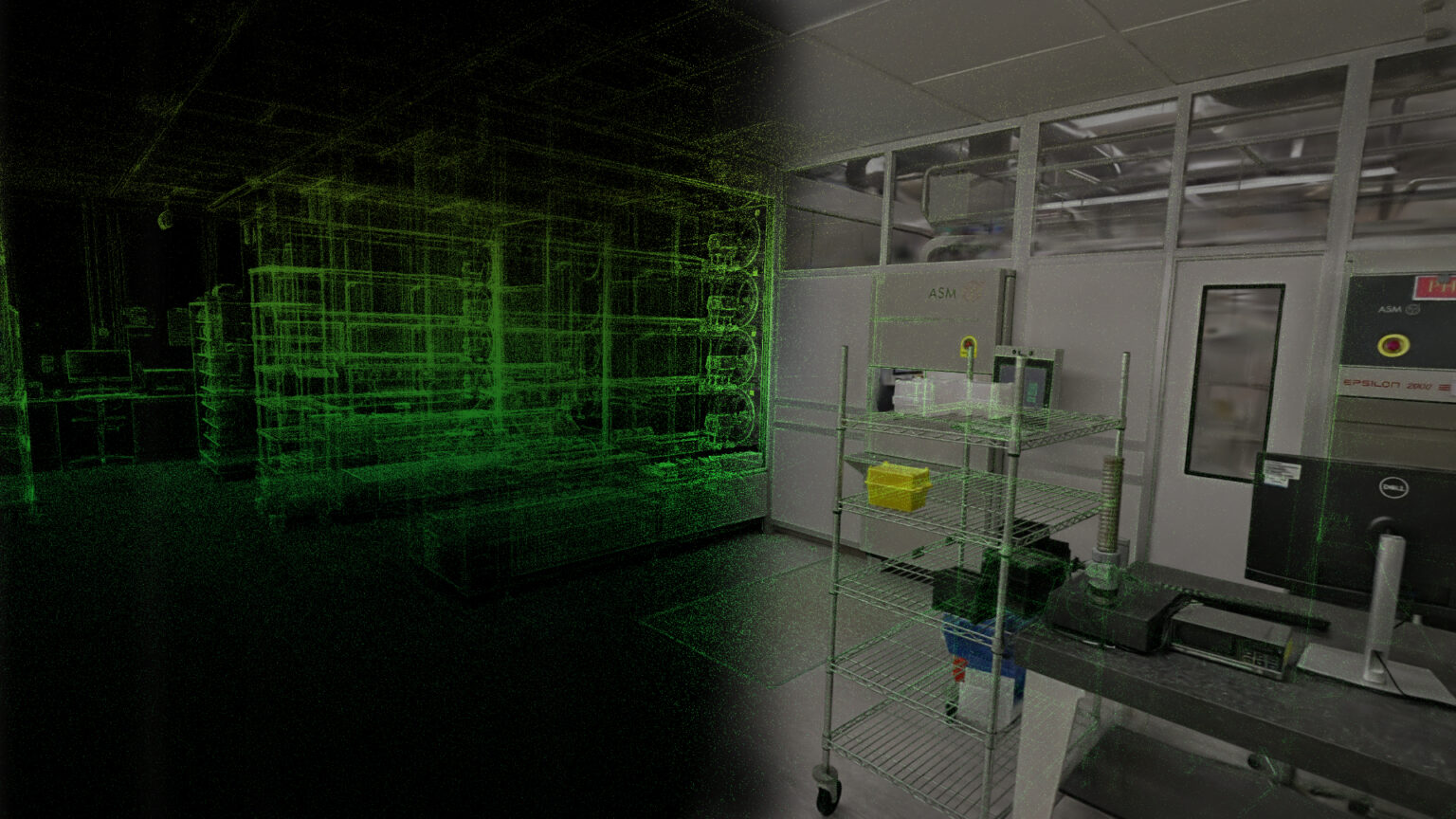
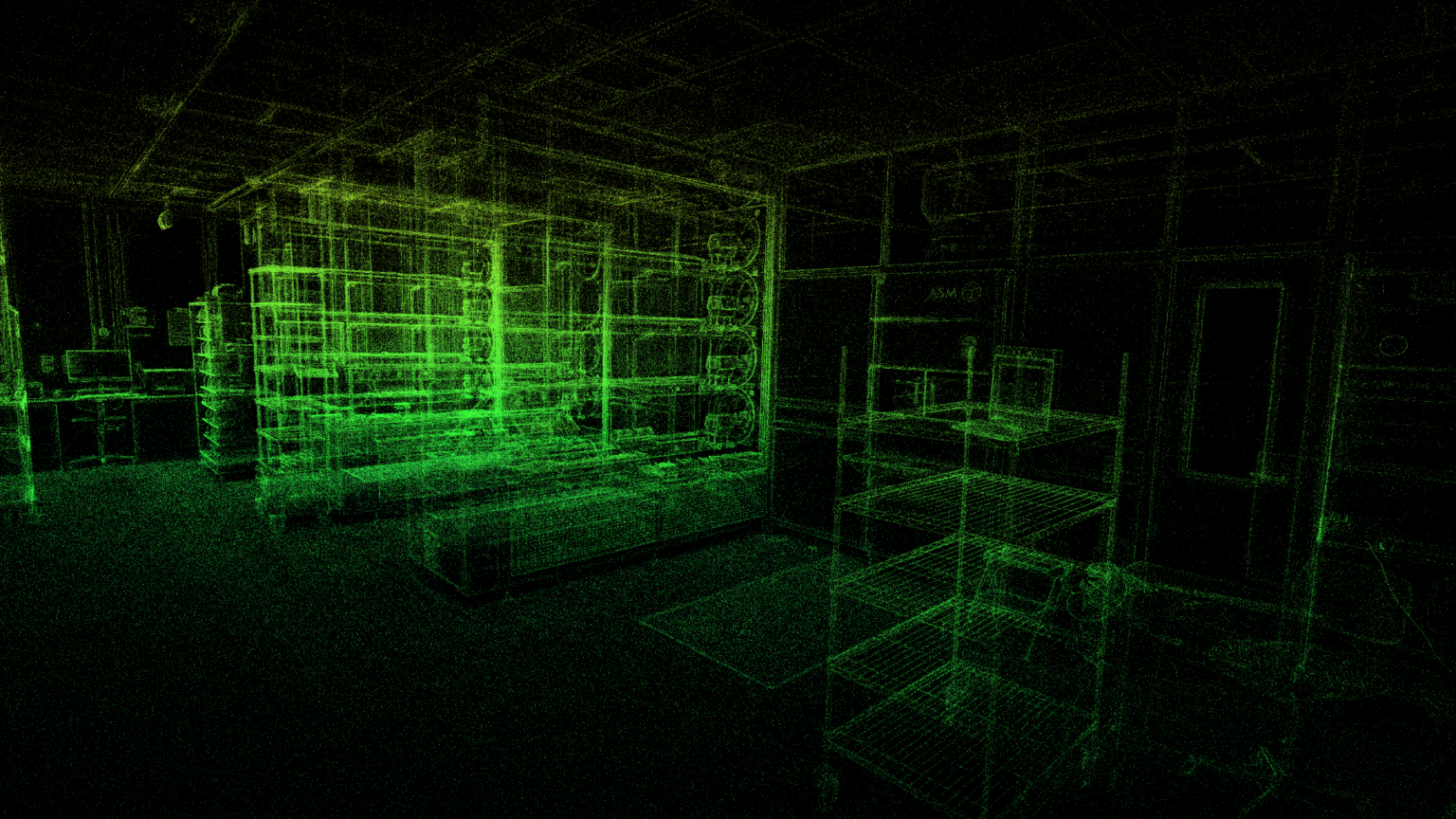
Gaussian Splatting is a technique for creating highly realistic 3D representations of real-world environments.
Instead of manually modelling an entire environment from scratch, a physical space can be captured and reconstructed as a digital representation.
The result is a photorealistic 3D representation that can be viewed from different perspectives.
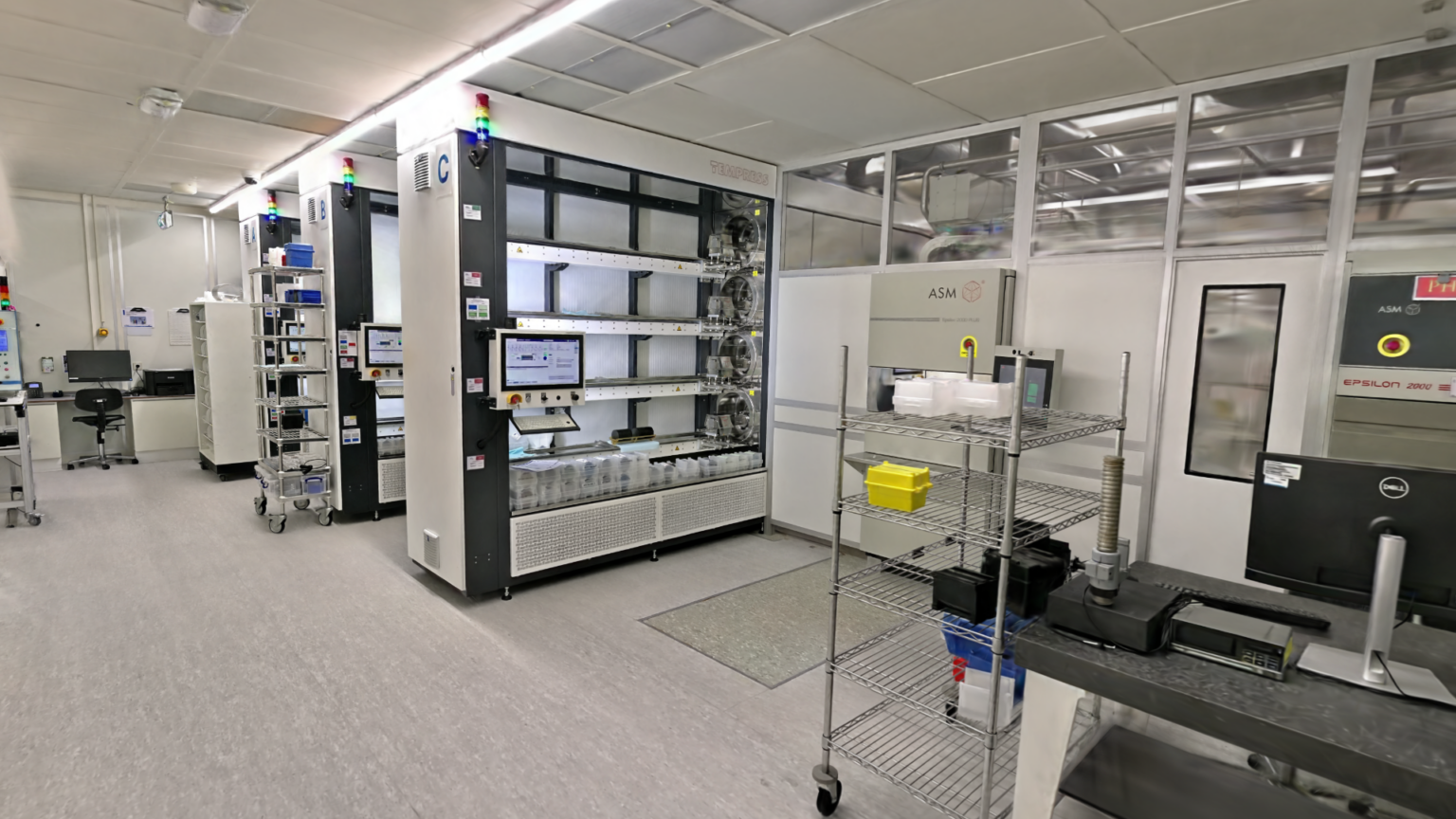
For the NewMedia Centre, this makes Gaussian Splatting particularly interesting for capturing complex spaces such as laboratories, clean rooms, industrial facilities and other research environments.
But there is an important distinction to make.
A Gaussian Splat is not automatically an interactive 3D model.
As Thijs Sanderse, Video Technician at TU Delft – NewMedia Centre, who works with the technology, puts it:
“ At the moment, it’s beautiful to watch, but it’s not interactive – yet.”


That distinction is important when deciding how the technology should be used.
Start with the story, not the technology
When new technologies appear, it can be tempting to begin with the question: What can this technology do?
At NewMedia Centre, the more useful question is often: How can education at TU Delft benefit from this technology?
Thijs describes this approach simply:
“You really have to listen to the people you work with to understand what they are trying to communicate, who they want to reach, and what they need their audience to experience.”
This is particularly relevant when working with researchers.
A researcher may want to document a facility. An educator may want students to explore a laboratory remotely. An architect may want to study an existing space. A research group may want to create a virtual environment in which new scenarios can be demonstrated.
All of these projects might involve 3D, immersive media or virtual environments — but they do not necessarily require the same technology.
Sometimes a 360° tour is the most appropriate solution. Sometimes Gaussian Splatting provides a better representation of the space. Sometimes the captured environment can become the foundation for a more complex interactive 3D experience.
The technology follows the purpose.
From captured reality to interactive environments
One of the most interesting possibilities is to use Gaussian Splatting as a foundation rather than as the final product.
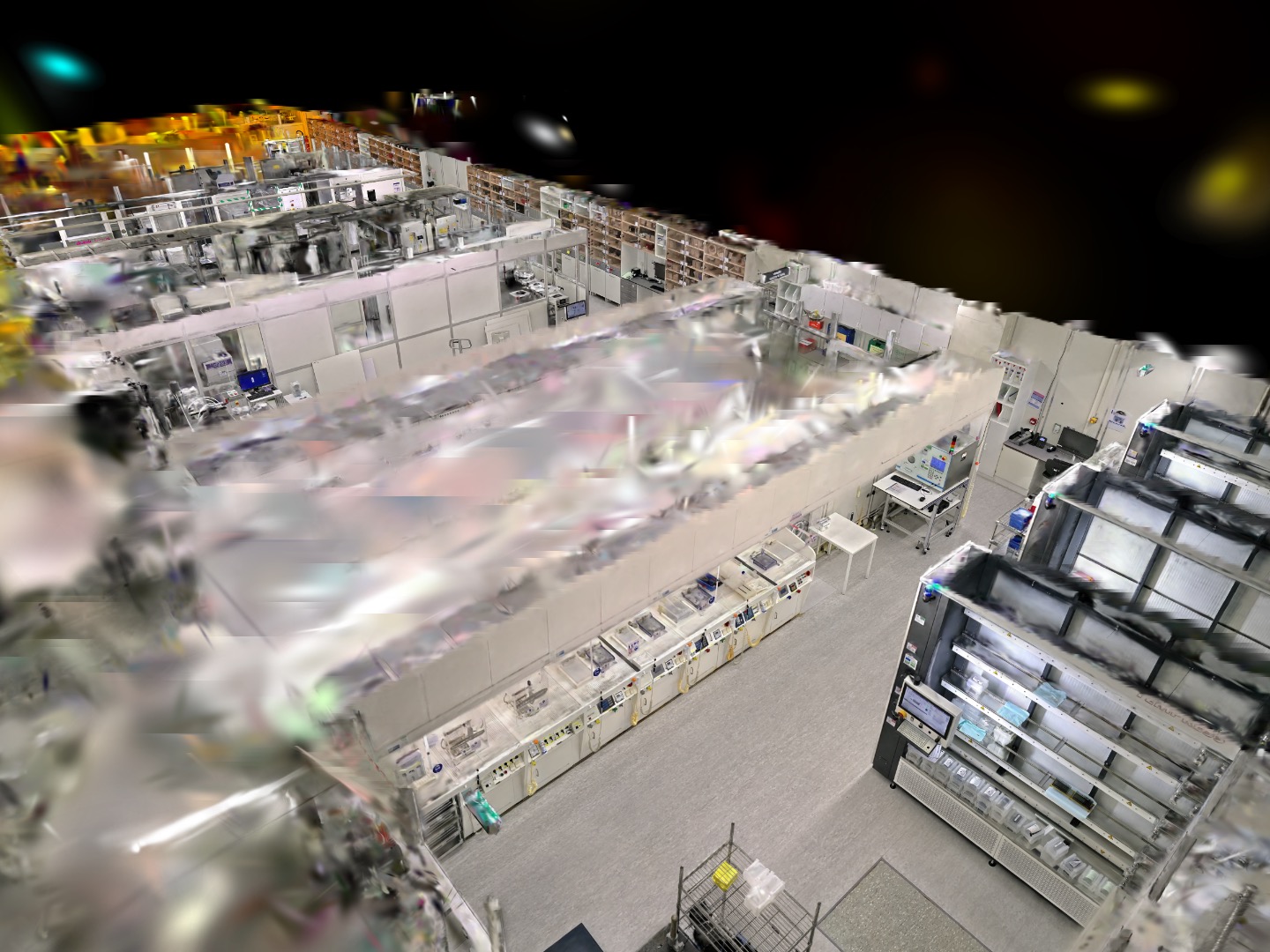
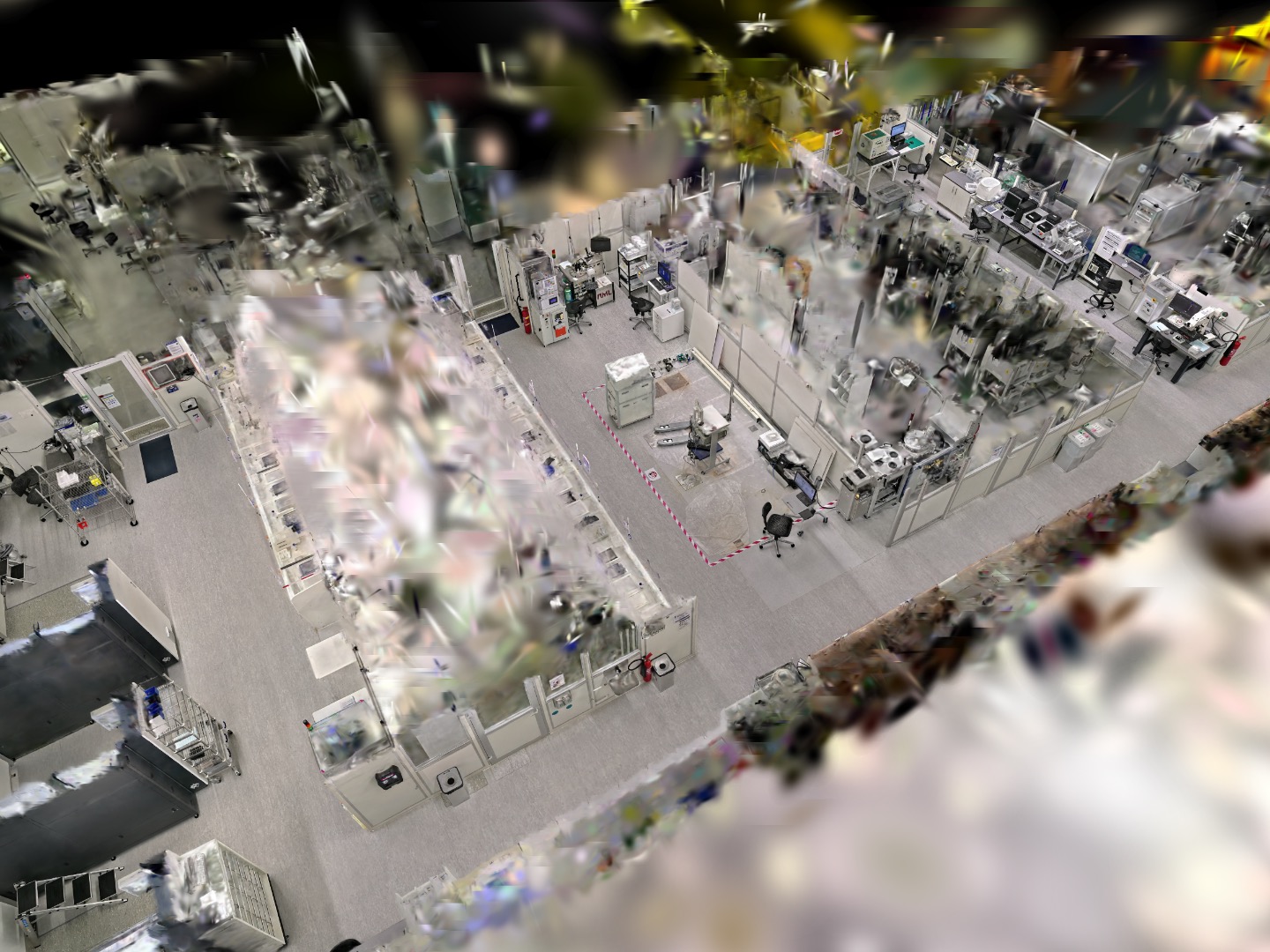
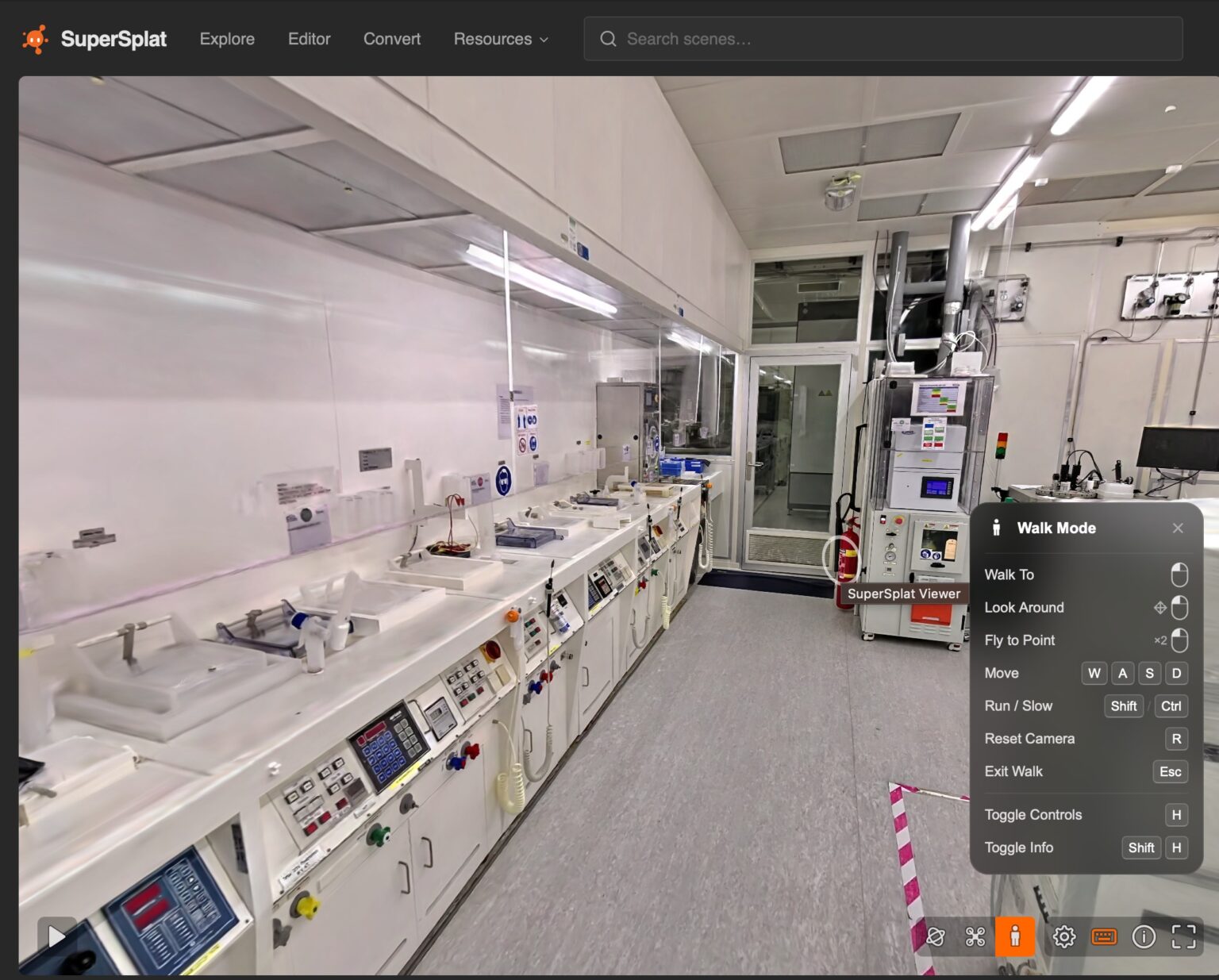
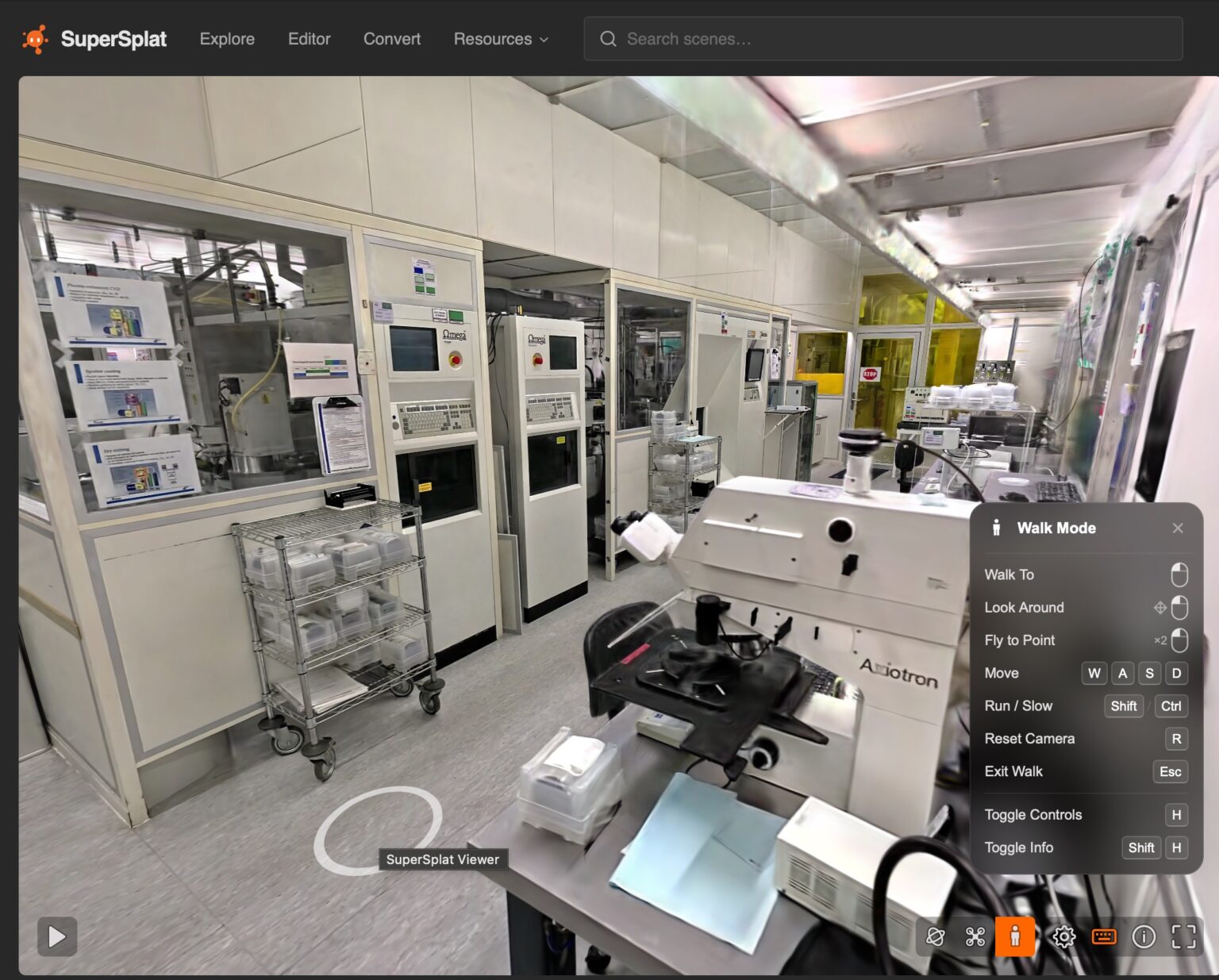
That’s what we did with a TU Delft Clean Room that has been captured using Gaussian Splatting.
A walk through a cleanroom, model built in LCC Studio, shot with an Xgrids Portalcam
Instead of spending time modelling every wall, machine and architectural detail from scratch, the captured environment can already provide a realistic digital basis. Additional 3D elements can then be added where interaction is actually needed.


For example, a virtual clean room could contain additional components that users can manipulate or use for a simulated experiment.
This approach could be particularly valuable in academic environments.
Researchers could use a realistic representation of an existing facility while adding virtual elements that do not physically exist. Students could explore environments they cannot easily visit. Educational experiences could be developed around real research facilities without requiring the physical space to be available every time.
The physical environment becomes the starting point. The digital layer adds what is needed.
And not everything has to be interactive. This is one of the reasons the technology is particularly interesting from a development perspective: it may reduce the amount of time and effort required to recreate an entire environment as a traditional 3D model.
Gaussian Splatting as a tool for research
The potential applications extend beyond immersive tours.
At NewMedia Centre, Gaussian Splatting is also being explored in relation to research, architecture, education and 3D modelling.
One example is the use of captured environments as references for creating 3D models.
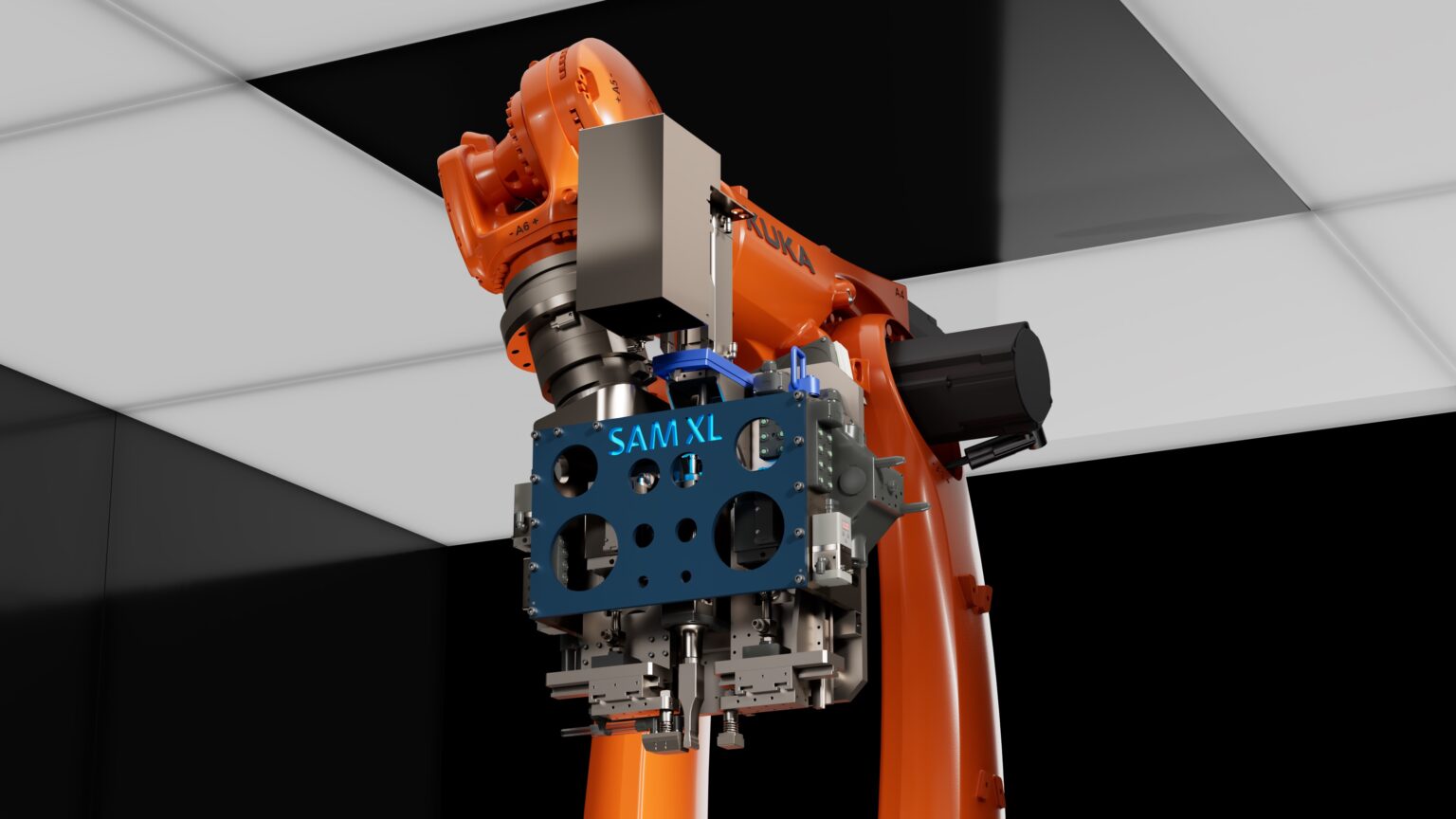
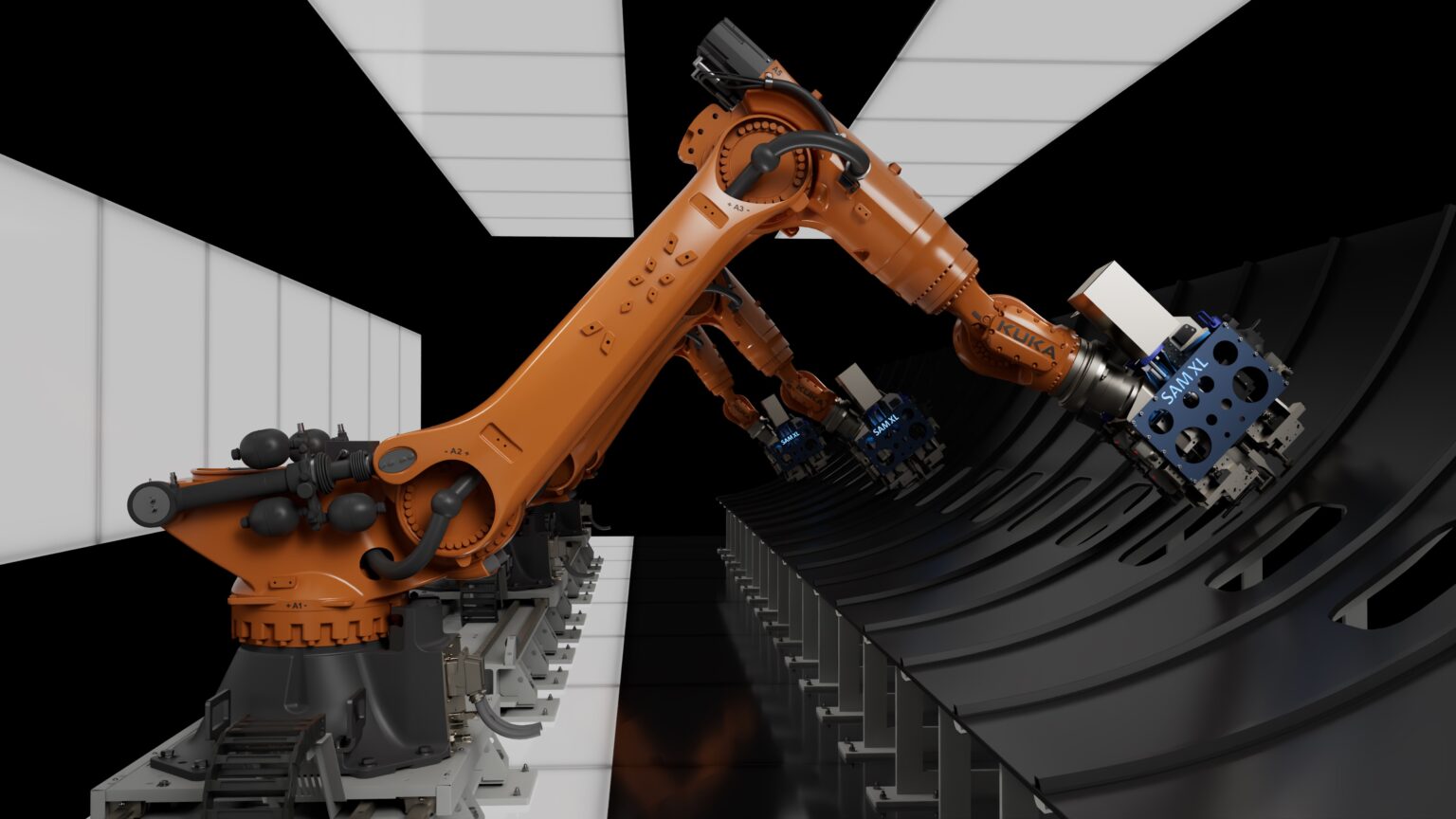
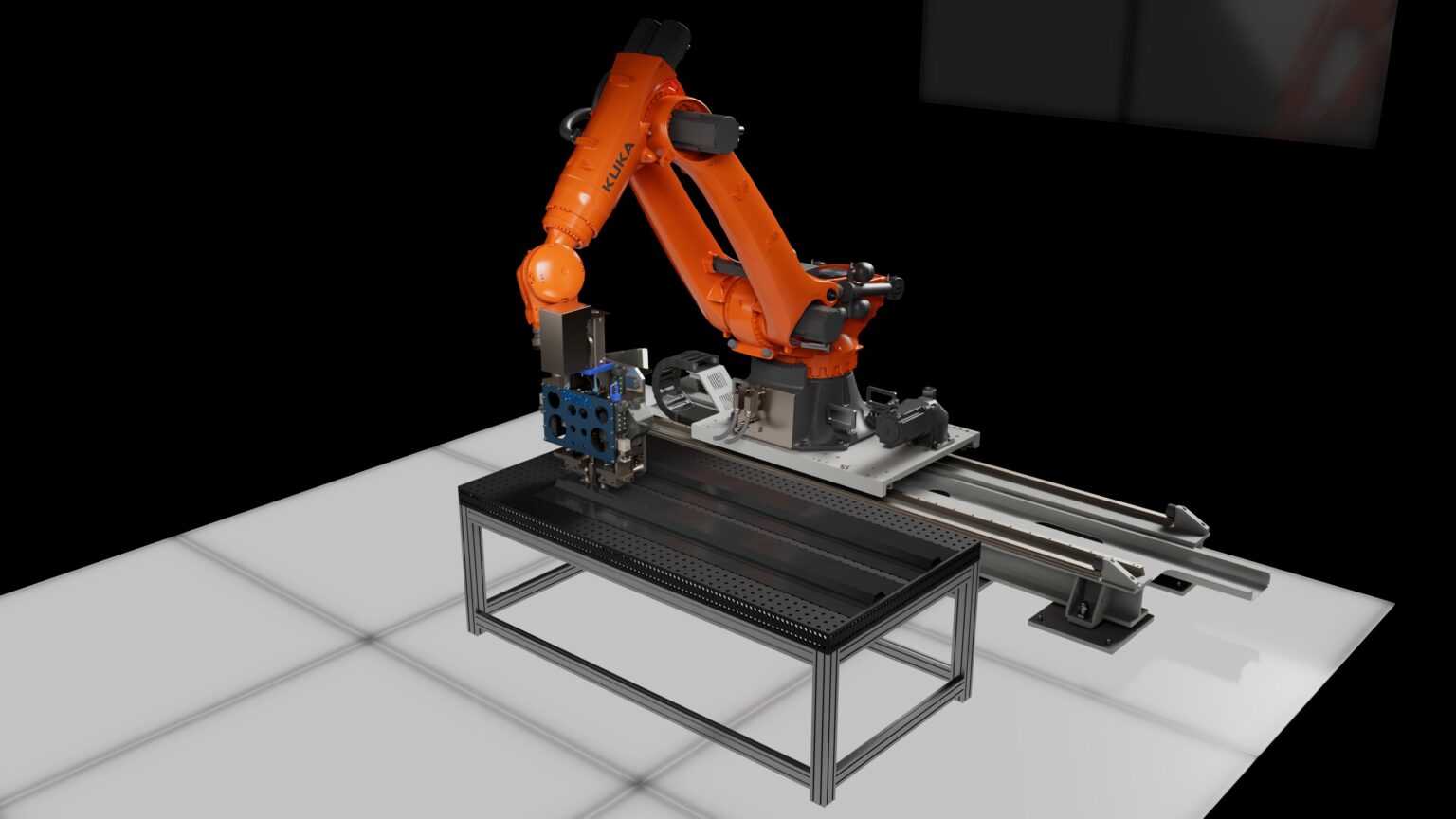
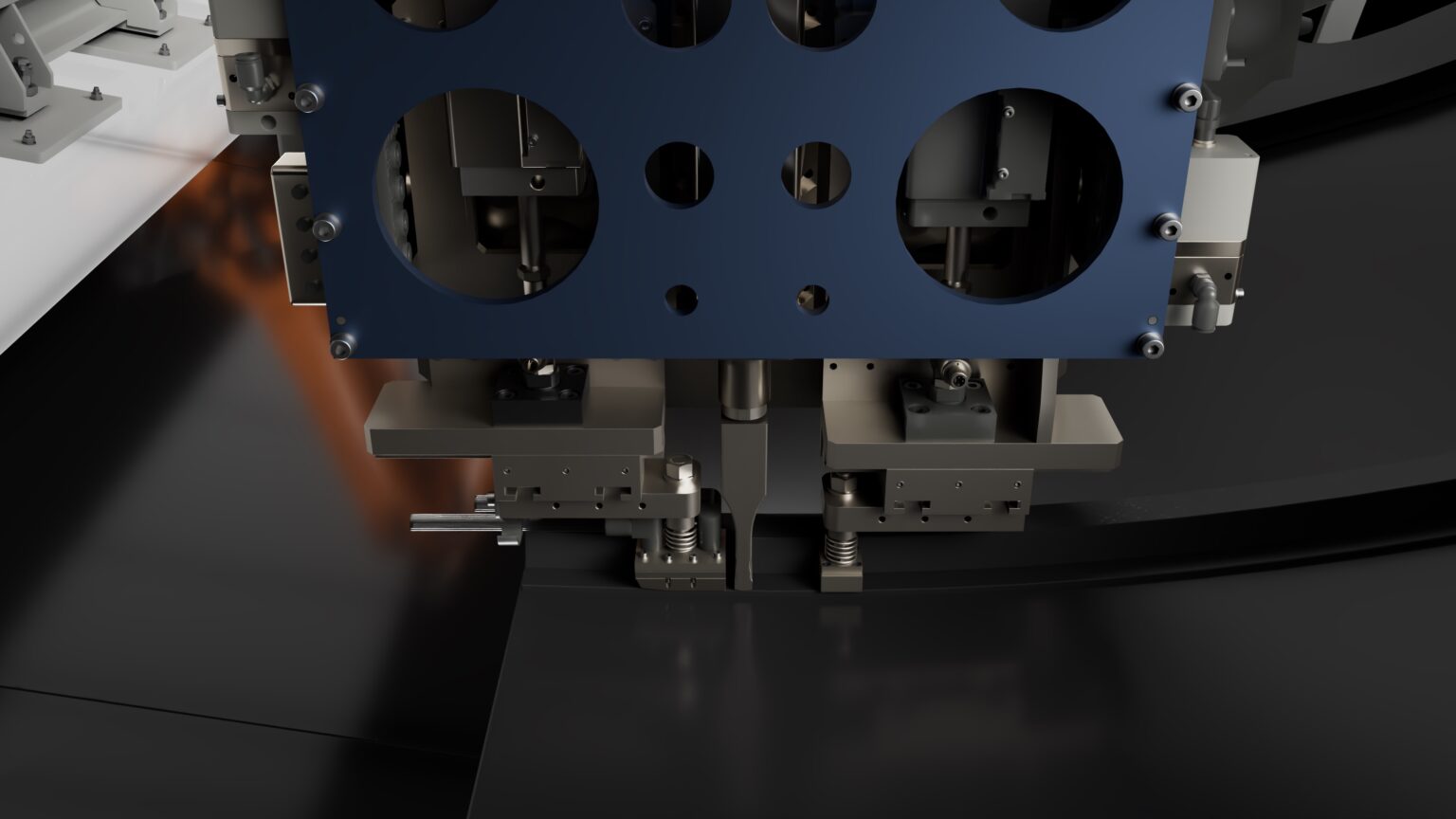
In one workflow, a Gaussian Splat of an industrial environment was used as a visual reference for modelling a robot arm. The Splat was not intended to provide precise measurements for every detail, but it could provide valuable contextual information: where components were positioned, what the environment looked like, and how different elements related spatially.
In this sense, Gaussian Splatting can function almost like a highly realistic digital sketch. It captures the environment first.
The more precise 3D modelling can then build on that foundation.
This can be particularly useful when the goal is not to reproduce every detail of a physical environment digitally, but to create only the elements that actually need to be modelled or interacted with.


From new technology to academic application
For TU Delft, the most interesting question is ultimately not whether Gaussian Splatting is impressive, but what researchers and educators can do with it. A captured laboratory, for example, could become the basis for a digital teaching environment, while an industrial facility could be documented for research, education or communication. An architectural site could be captured and studied digitally, and complex environments could be recreated without the need to manually model every component. In this way, a realistic digital representation can become more than a visualisation: it can provide a foundation for new ways of exploring, teaching and interacting with real-world spaces.
This is also how the NMC team approaches emerging media technologies at TU Delft: first exploring what is possible, understanding the strengths and limitations of a technology, and then looking for meaningful applications in research, education and knowledge sharing. Gaussian Splatting is not a solution in itself, but another tool in a growing toolbox, one that can open up new possibilities for working with real environments in digital form.
Gaussian Splatting: Thijs Sanderse
3D modeling: Arno Freeke
Read more stories:

Teacher – Classroom Simulator using AI
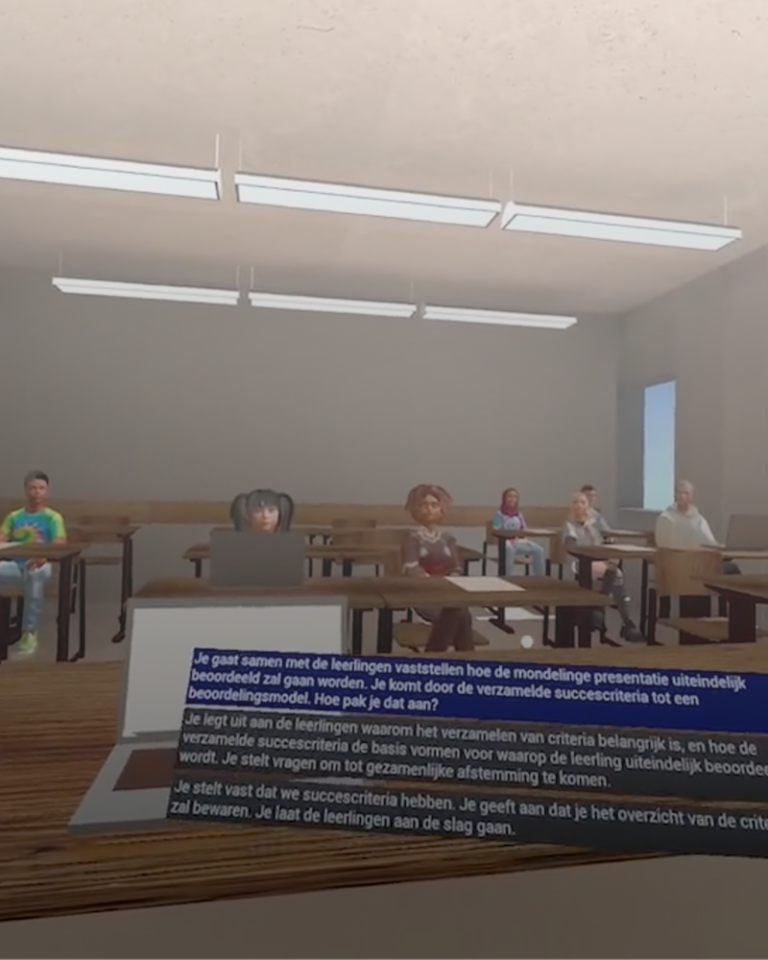
In collaboration with Hogeschool Fontys, TU Delft, and XR Zone, we developed an AI-driven Teacher Classroom Simulator for didactics courses. The project explores how VR can enhance teacher training by offering immersive classroom experiences with real-time feedback. Virtual students simulate authentic behaviour, helping educators refine their skills. By prioritising practical applications, the platform aims to make innovative, immersive education accessible and adaptable to diverse teaching contexts.
3D Scanner
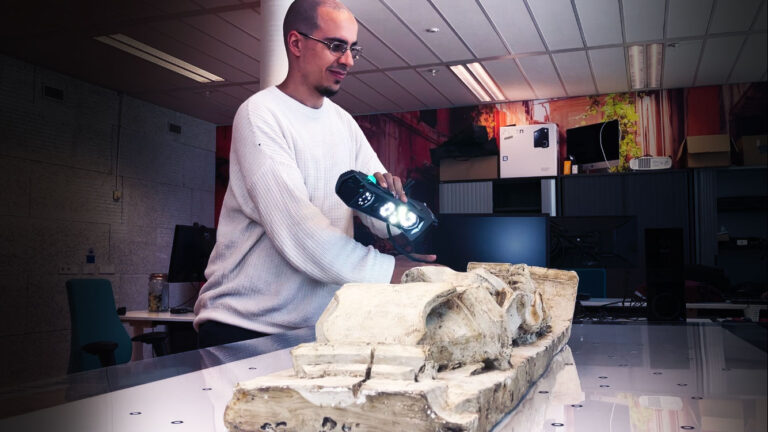
The Media Lab is developing a 3D scanning service using the Creaform Go Scan, testing workflows and creating user-friendly instructions. The scanner captures detailed models of objects, while a new application will automate optimization and export to formats like glTF and FBX for various applications.
Inside NMC Graphics: The Story of Cok Francken
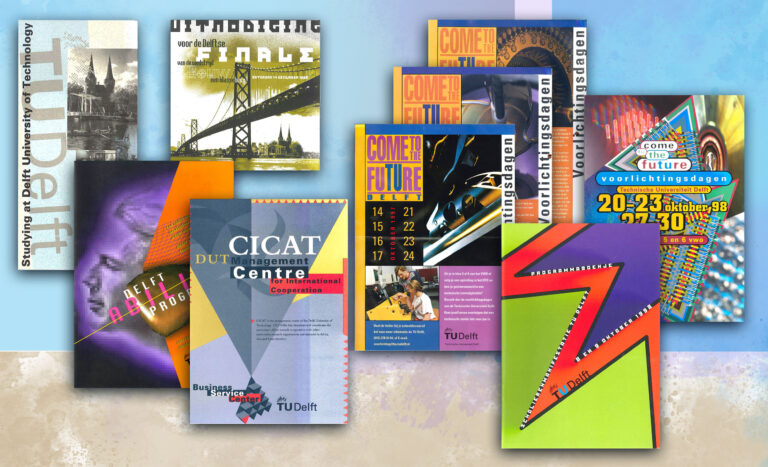
Cok Francken’s 30-year journey at TU Delft spans posters, identity systems, and large-scale installations. Known for clarity and balance, he begins with pencil sketches and draws inspiration from real-world textures and photography. His experience with big formats and careful use of AI tools shapes designs that feel authentic, thoughtful, and visually compelling.