
NewMedia Centre Stories

Teacher – Classroom Simulator using AI

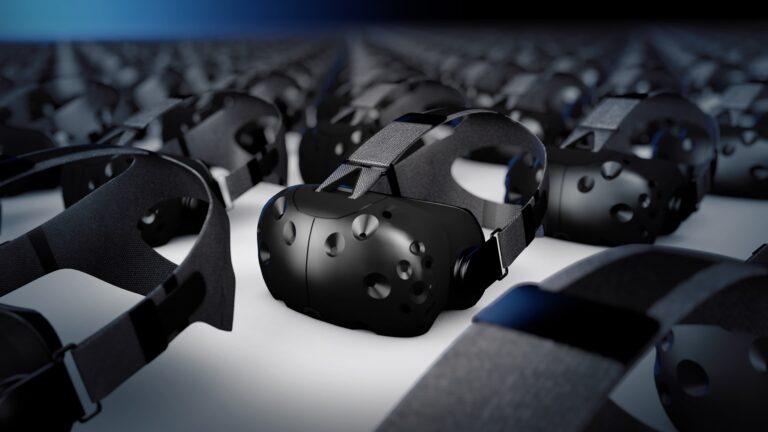
In collaboration with Hogeschool Fontys, SEC from TU Delft, and XR Zone, we embarked on creating an AI-driven Teacher Classroom Simulator for didactics courses. Our aim was to explore the potential of VR in teaching and provide educators with a virtual training ground. Lecturers applying VR capabilities to implement innovative didactic methodologies for teaching students. Additionally, XR Zone offers an alternative pedagogical solution, leveraging cutting-edge technology to facilitate knowledge transfer within the classroom.

Their didactic approach prioritises practical applications, applying VR to enhance learning experiences.

“Their didactic approach prioritises practical applications, applying VR to enhance learning experiences”

The project grew from a shared passion for improving teaching through VR. Initially, we focused on education and AI.

The Educational Environment provides immersive classroom experiences with helpful feedback. We tested text prompts and verbal cues to help teachers, using VR to make learning more engaging.

On the AI side, virtual students act like real ones, evaluating teaching skills with voice and behaviour tracking. Two years of development, with a year of refining, taught us a lot from trials with new teachers. Our goal is to make our platform accessible for others and adaptable to different teaching situations to provide immersive education.

Initiator:
Dr.ir. Margreet Docter
Dr. K.D. Beekman

Researchers:
Tamara De Vries,
Alfin Thomas

Developer:
Huu Dat Nguyen

Read more stories:

The Lightboard: making blended learning more engaging at TU Delft

At TU Delft, blended learning combines the flexibility of online teaching with the impact of face-to-face interaction. One tool making this possible is the Lightboard—a transparent glass board that lets educators write while facing the camera. Unlike traditional slides, it shows both the lecturer’s explanations and their expressions, making learning more engaging and personal. From flipped classrooms to problem-solving videos, the Lightboard helps teachers share not just answers, but the thinking process behind them—turning lessons into stories that connect with students.

Read More »

Point and Click Game Online course 

To enhance medical education, Dr. Marjon Stijntjes developed a web-based simulation that teaches students to assess the revalidation needs of elderly patients after hospital discharge. Set in a virtual home environment, students gather clues by interacting with everyday objects, simulating real-life clinical judgment. The patient’s condition evolves weekly, training students to recognize change over time. Accessible via browser, the tool has been praised for its intuitive, gamified design and practical relevance — a powerful example of how serious games can transform healthcare training.

Read More »

Blended Learning Animations – Who Is the Engineer of the Future?

How do students discover who they want to become? At TU Delft, the Mechanical Engineering faculty paired with the New Media Centre’s Graphics team to address that question through animated storytelling. By developing eight distinct “Engineer of the Future” personas—each with its own narrative, style, and personality—students could see relatable career paths. Hand-drawn illustrations and concise two-minute videos translated complex concepts into engaging scripts, creating a compelling blended learning experience that inspires and informs.

Read More »