


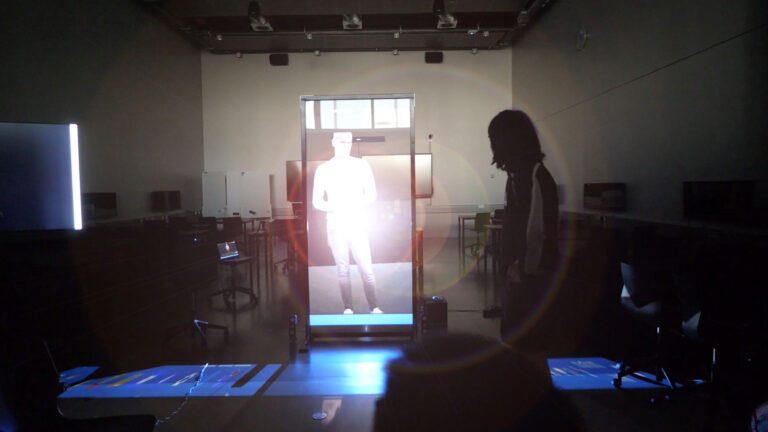
The NewMedia Centre and Mexico’s Monterrey Institute of Technology piloted holographic teaching, projecting life-sized remote teachers into classrooms. Using cameras, projectors and software, the system enabled realistic remote lectures, presentations and meetings, opening new possibilities for immersive, borderless education.
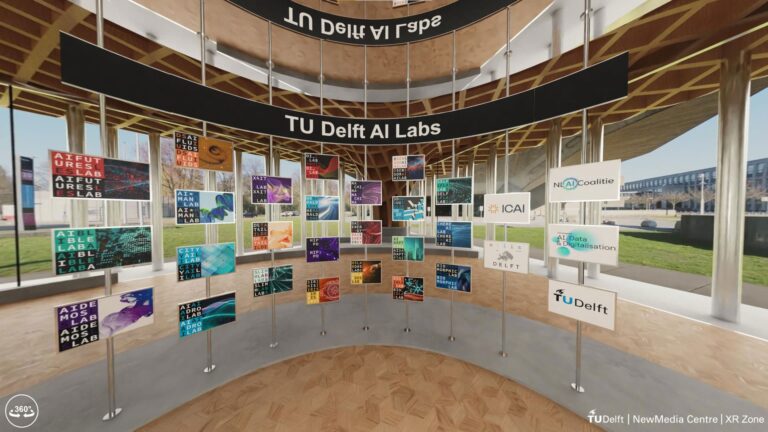
In response to COVID-19, the TU Delft AI Labs & Talent Programme moved their poster event online, partnering with the XR Zone to create a 360° virtual walkthrough. This interactive platform showcased research from 24 Delft AI Labs, overcoming challenges with 360° imagery and 3D models. The project expanded to include new labs, research, and pitch videos, paving the way for future virtual events.
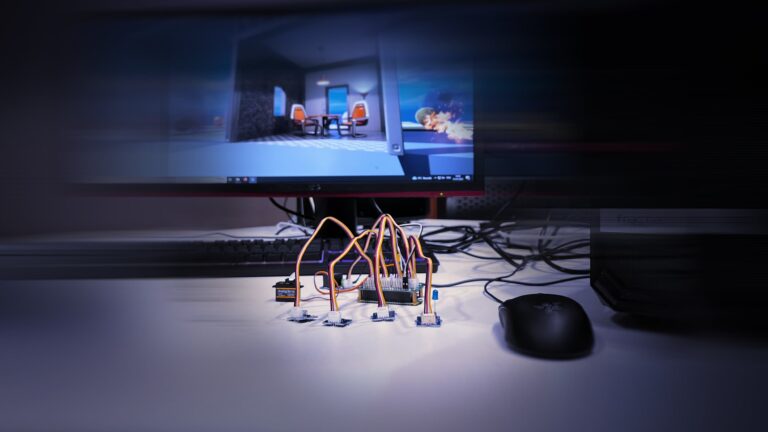
The IoT Bridge connects Grove-based IoT sensors to Unity and Unreal, enabling real-time data use in XR and game projects. With a Raspberry Pi image and engine plugins, it allows students and researchers to create immersive, sensor-driven experiences and explore innovative Serious-Game and XR applications.