


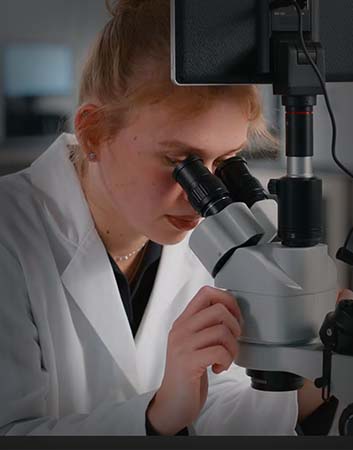
The Bachelor’s programme in Life Science and Technology is constantly evolving. For this project, we created a promotional video that gives prospective students a clear and current picture of the programme and of the paths it can lead to after graduation.
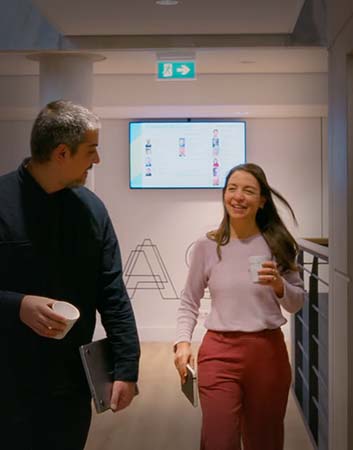
Every TU Delft staff member is periodically invited to a Resultaat- en Ontwikkelgesprek. To support that process, we were asked to create a short, dynamic video that would be included with every invitation and underline the value of the conversation.
In collaboration with NMC Live, we developed the event’s opening sequence. What began as an energetic video designed to immediately engage the audience evolved into a powerful showcase of everything TU Delft has achieved in recent years.
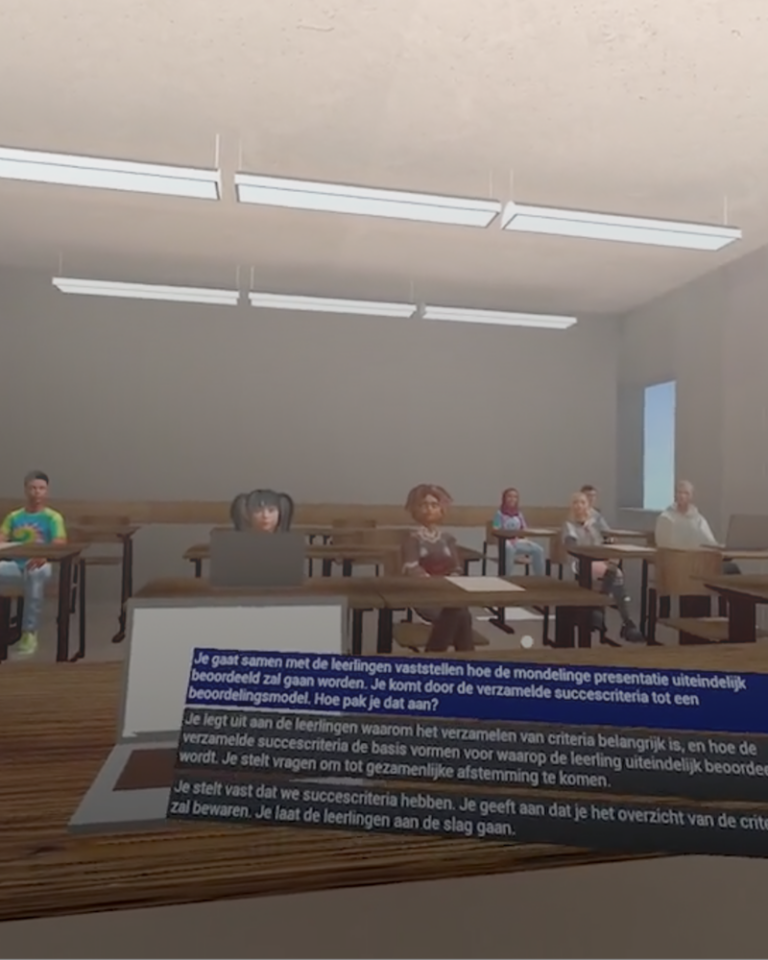
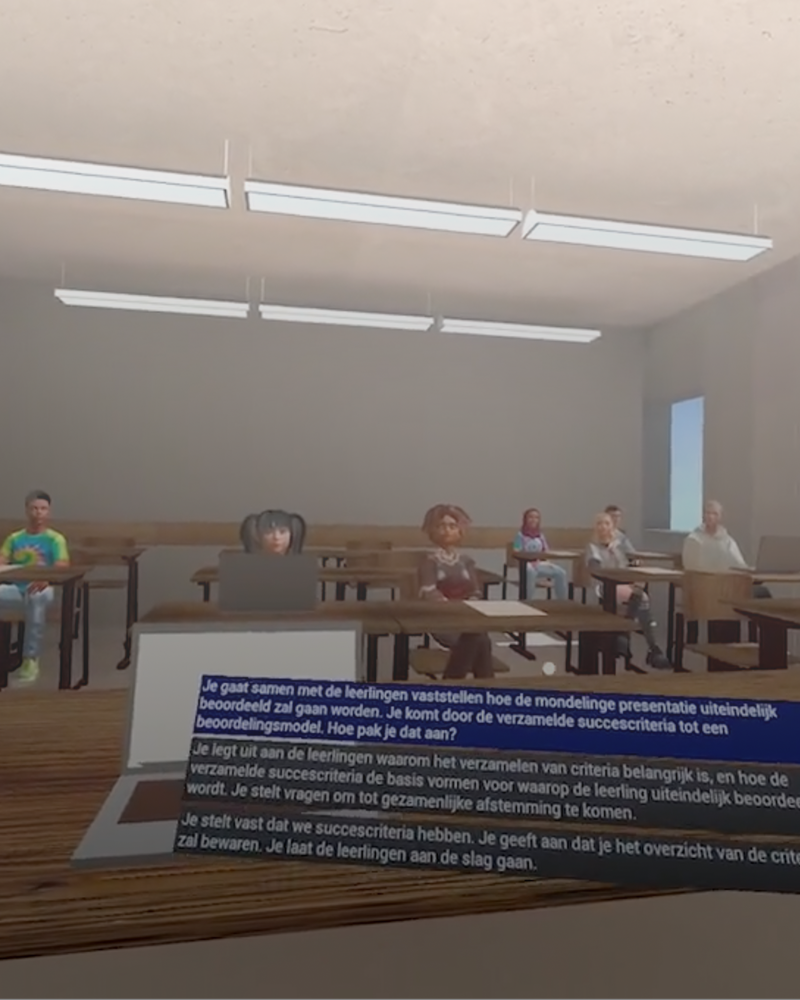
In collaboration with Hogeschool Fontys, TU Delft, and XR Zone, we developed an AI-driven Teacher Classroom Simulator for didactics courses. The project explores how VR can enhance teacher training by offering immersive classroom experiences with real-time feedback. Virtual students simulate authentic behaviour, helping educators refine their skills. By prioritising practical applications, the platform aims to make innovative, immersive education accessible and adaptable to diverse teaching contexts.
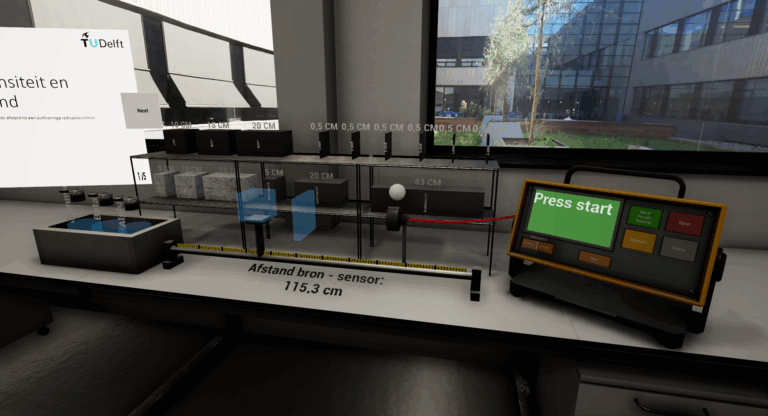
The Radioactivity project uses VR to make learning safe and immersive, letting students explore radiation through realistic experiments while teachers guide remotely. By overcoming safety limits and instructor shortages, this innovative VR app democratizes access to hands-on science, transforming how students experience and understand radioactivity across classrooms everywhere.

The Safety Science Wall transforms a TPM corridor into a visual story of safety science, created by Cok Francken, graphic designer from TU Delft’s NMC. Six large panels trace the field’s evolution using restored images, infographics, and archival posters, showcasing how design and research can turn complex history into an engaging, accessible narrative.